Forming · via partner factories
Stamping & deep drawing
Brackets, contacts, shields – in large series.
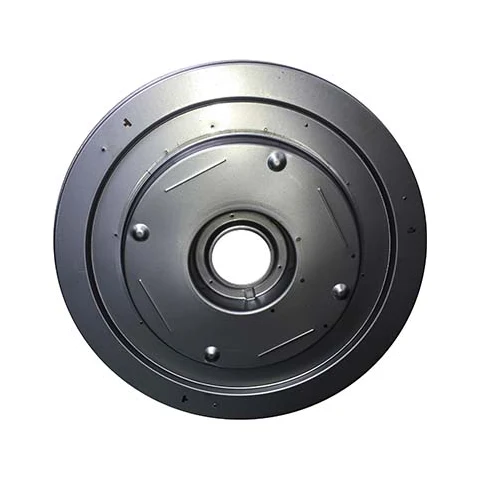
Process
How a part is made.
- DFM & strip layoutFrom your drawing we develop the strip layout: in which order is the part cut, pierced and bent?
- Die makingProgressive or transfer die in tool steel; simple blanking dies for small quantities.
- StampingThe coil runs through the press; each stroke produces a finished part – cutting, coining, bending, drawing.
- FinishingDeburring (vibratory finishing), thread forming, surface – e.g. zinc, nickel or tin plating, powder coating.
We produce this process through selected partner factories – with the same project management, first-article inspection and final inspection as our six core processes.
Materials
Which materials are common?
| Material | Examples | Typical application |
|---|---|---|
| Cold-rolled / deep-drawing steel | DC01, DC04, DC06 | Brackets, housing parts, drawn parts |
| Galvanised sheet | DX51D+Z | Mounting plates, covers |
| Stainless steel | 1.4301, 1.4310 | Clips, springs, food industry |
| Spring steel | C75S, 1.4310 | Springs, clips, contact springs |
| Copper / brass / bronze | Cu-ETP, CuZn37, CuSn6 | Contacts, busbars, connectors |
| Aluminium | EN AW-5754, EN AW-1050 | Shields, cooling plates |
Guide values
Tolerances and finishes
| Feature | Guide value |
|---|---|
| Tolerance, cut contour | typically ± 0.05 – 0.1 mm |
| Tolerance across bends | typically ± 0.1 – 0.2 mm, angle ± 0.5 – 1° |
| Sheet thickness | approx. 0.1 – 6 mm |
| Burr | up to about 10 % of sheet thickness – state the burr side on the drawing |
| Finishes | Zinc, nickel or tin plating, powder coating, e-coating |
| Inspection | First articles with measurement report, gauge inspection in series |
* Typical guide values. What applies to your part we confirm in the quote based on the drawing.
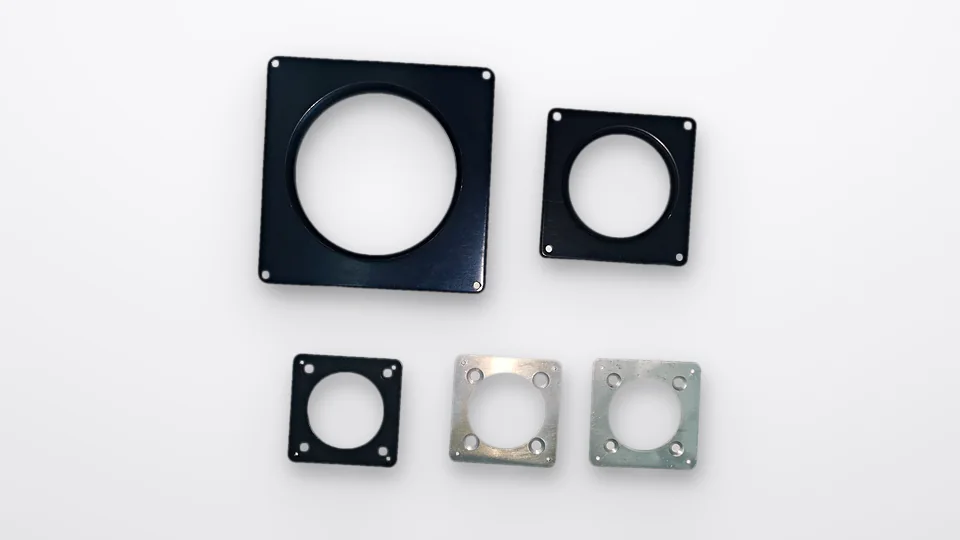
Design
Six rules for cost-effective parts.
Most costs are fixed in the design. We check these rules in every quote as DFM notes.
What drives the price
- Die: number of stations, size, tool steel
- Sheet material and strip utilisation
- Press size and stroke rate
- Deburring, finish, threads and assembly
FAQ
Questions about stamping & deep drawing
From what quantity does a stamping die pay off?
A progressive die typically pays off from about 5,000 to 10,000 parts per year. Below that, laser cutting and bending is usually cheaper.
What is the difference between stamping and laser cutting?
Stamping needs a die but is then very fast and cheap per part. Laser cutting needs no tooling and suits samples and small series.
Can stamped parts have threads?
Yes – through extruded holes with formed threads, press-in nuts or thread forming afterwards.
Other processes:
From the factory
What Stamping & deep drawing looks like in production.
Original footage from the Schutawill company video – the machines and people who make your parts. No sound.
Your drawing.
Our quote.
Upload STEP or PDF – you receive feasibility, process, tooling cost, unit price and lead time.
Upload a drawing- Quote with DFM notes – non-binding
- NDA before the first exchange
- First articles with measurement report