Powder metallurgy
Sintered parts
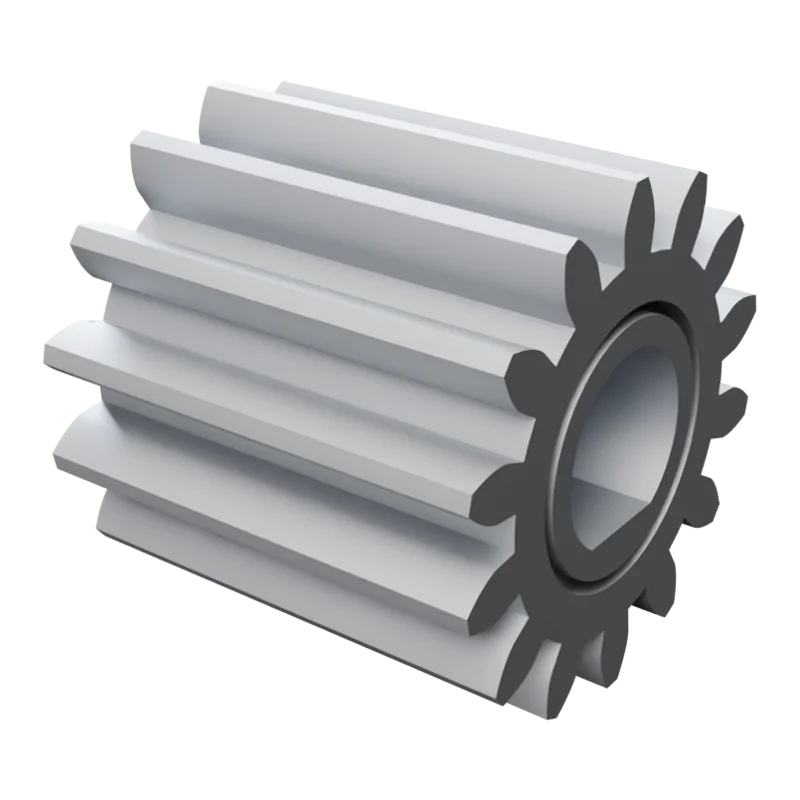
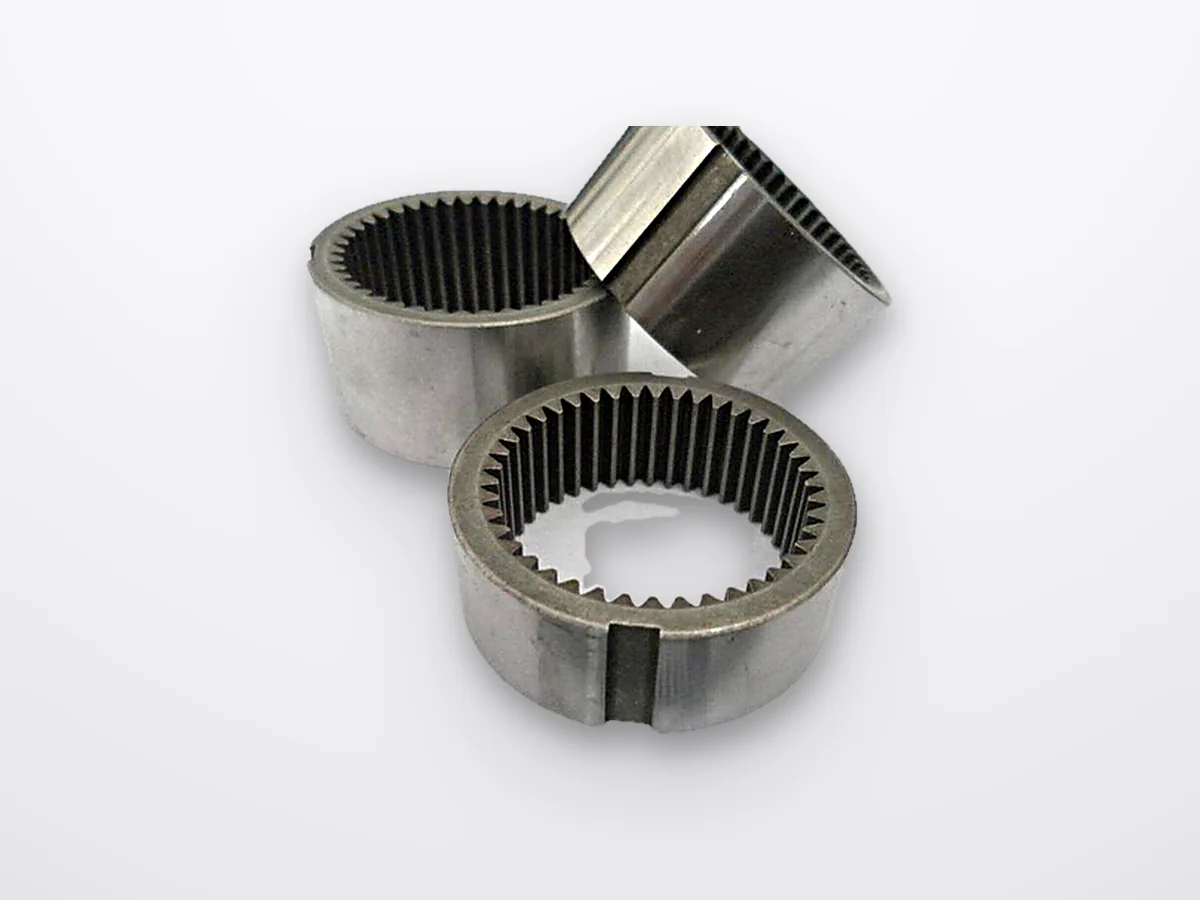
Gears, plain bearings, cams – pressed to near-net shape.
Process
How a part is made.
- Powder mixIron, steel or bronze powder is mixed with alloying elements and pressing lubricant.
- PressingThe green compact with the final contour is formed in a carbide or steel die.
- SinteringIn a continuous furnace under protective gas the powder particles bond into a solid part.
- Secondary treatmentSizing for tight tolerances, hardening, steam treatment or oil impregnation for bearings.
Materials
Which materials are common?
| Material | Type | Typical application |
|---|---|---|
| Fe-Cu-C | sintered steel, copper-alloyed | Gears, cams, structural parts |
| Fe-Ni-Cu-Mo | diffusion-alloyed sintered steel | Highly loaded gears, synchroniser parts |
| CuSn10 | sintered bronze, oil-impregnated | Self-lubricating plain bearings |
| Fe-Cu (porous) | sintered iron, oil-impregnated | Low-cost plain bearings |
| 316L | sintered stainless steel | Corrosion-resistant parts, filters |
Guide values
Tolerances and finishes
| Feature | Guide value |
|---|---|
| Tolerance | radial approx. ± 0.05 – 0.1 mm, finer after sizing; coarser in pressing direction |
| Density | sintered steel approx. 6.4 – 7.2 g/cm³ |
| Geometry | contour in pressing direction; height to diameter up to about 2 : 1 |
| Secondary treatment | Sizing, hardening, steam treatment, oil impregnation, vibratory finishing |
| Tooling | Press die in carbide or tool steel |
| Inspection | Measurement report, density, hardness; first articles from series tooling |
* Typical guide values. What applies to your part we confirm in the quote based on the drawing.
Design
Six rules for cost-effective parts.
Most costs are fixed in the design. We check these rules in every quote as DFM notes.
What drives the price
- Press die and press size (part area)
- Powder material and part weight
- Density, sizing and heat treatment
- Machining of features across the pressing direction
FAQ
Questions about sintered parts (pm)
What is the difference between sintering and MIM?
Both are powder-metallurgy processes. Sintering presses powder, which limits geometry to contours in pressing direction. MIM injects a powder-binder mix – allowing much more complex, smaller parts.
Are sintered parts as strong as wrought steel?
Due to residual porosity, strength is usually lower; with higher density, alloying and heat treatment, sufficient values are achieved for many gears and structural parts.
Why are sintered bearings self-lubricating?
The open pores are impregnated with oil. In operation the oil emerges at the running surface through heating and is drawn back at standstill.
Other processes:
From the factory
What Sintered parts looks like in production.
Original footage from the Schutawill company video – the machines and people who make your parts. No sound.
Your drawing.
Our quote.
Upload STEP or PDF – you receive feasibility, process, tooling cost, unit price and lead time.
Upload a drawing- Quote with DFM notes – non-binding
- NDA before the first exchange
- First articles with measurement report