Sheet metal · via partner factories
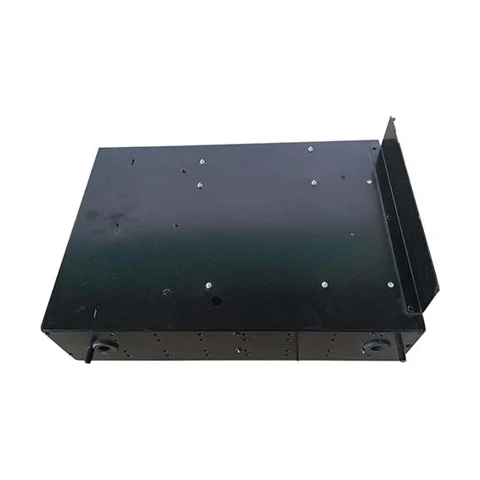
Sheet-metal fabrication
Enclosures, brackets, frames – from the first piece.
Process
How a part is made.
- Flat patternThe flat pattern with bend allowances is derived from the 3D model; nesting makes optimal use of the sheet.
- Laser cuttingFibre lasers cut contour, holes and cut-outs without tooling – including hole patterns and vents.
- Bending & joiningPress brakes form the flanges; press-in nuts and studs, welding or rivets join the parts.
- FinishDeburring, grinding, then powder coating, zinc plating, anodising or brushing.
We produce this process through selected partner factories – with the same project management, first-article inspection and final inspection as our six core processes.
Materials
Which materials are common?
| Material | Examples | Typical application |
|---|---|---|
| Steel sheet | DC01, S235JR | Enclosures, frames, brackets |
| Galvanised sheet | DX51D+Z | Cabinet and mounting parts |
| Stainless steel | 1.4301, 1.4404 | Food, medical, outdoor |
| Aluminium | EN AW-5754 (AlMg3), EN AW-5083 | Light enclosures, front panels |
| Copper / brass | Cu-ETP, CuZn37 | Busbars, decorative parts |
Guide values
Tolerances and finishes
| Feature | Guide value |
|---|---|
| General tolerance | ISO 2768-m; for bent parts usually DIN 6930-2 |
| Laser cut | typically ± 0.1 mm |
| Bending | typically ± 0.2 mm per bend, angle ± 0.5 – 1° |
| Sheet thickness | laser approx. 0.5 – 20 mm steel; bending up to approx. 10 mm |
| Joining | Press-in nuts, welding (TIG, MAG, spot), riveting |
| Finishes | Powder coating in RAL colours, zinc plating, anodising, brushing |
* Typical guide values. What applies to your part we confirm in the quote based on the drawing.
Design
Six rules for cost-effective parts.
Most costs are fixed in the design. We check these rules in every quote as DFM notes.
What drives the price
- Sheet material, thickness and nesting
- Number of bends and setups
- Welding, press-in parts and assembly
- Finish and batch size
FAQ
Questions about sheet-metal fabrication
Sheet-metal part or machined part?
For enclosures and brackets with uniform wall thickness, a sheet-metal part is usually much cheaper and lighter. Machining pays off for solid, stiff parts with tight tolerances.
Can I get samples first and series later?
Yes. Samples are made without tooling by laser and press brake; at high volumes we check switching to a stamping die.
Which documents do you need?
A 3D model (STEP) with sheet thickness and bend radii and a drawing with tolerances, material and finish.
Other processes:
From the factory
What Sheet-metal fabrication looks like in production.
Original footage from the Schutawill company video – the machines and people who make your parts. No sound.
Your drawing.
Our quote.
Upload STEP or PDF – you receive feasibility, process, tooling cost, unit price and lead time.
Upload a drawing- Quote with DFM notes – non-binding
- NDA before the first exchange
- First articles with measurement report