Machining
CNC milling
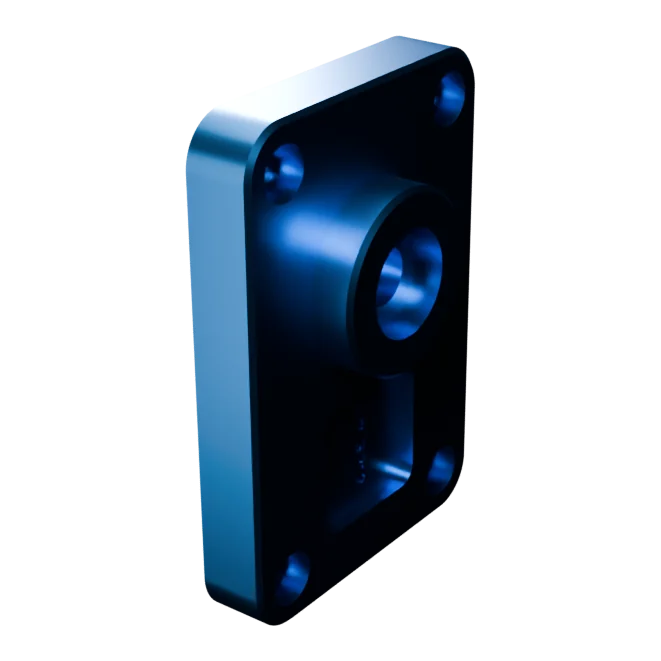
Housings, plates, brackets – machined from solid.
Process
How a part is made.
- CAM programmingTool paths are created from the STEP model; clamping position and fixtures are defined.
- Roughing & finishingMaterial is first removed quickly, then contours and mating faces are milled to size.
- Multi-sided machiningComplex parts are machined on several axes or in several setups, including holes and threads.
- FinishDeburring, inspection, surface treatment – e.g. anodising, powder coating, chromating or blasting.
Materials
Which materials are common?
| Material | Examples | Typical application |
|---|---|---|
| Aluminium | EN AW-6082, EN AW-5083, EN AW-7075 | Housings, brackets, plates, lightweight parts |
| Structural / heat-treatable steel | S235, S355, C45, 42CrMo4 | Machine parts, fixtures |
| Stainless steel | 1.4301, 1.4404, 1.4305 | Food, medical, outdoor use |
| Tool steel | 1.2312, 1.2842 | Fixtures, mould plates |
| Brass / copper | CuZn39Pb3, Cu-ETP | Contacts, busbars |
| Engineering plastics | POM, PA6, PEEK, PMMA | Insulators, sliding parts, prototypes |
Guide values
Tolerances and finishes
| Feature | Guide value |
|---|---|
| General tolerance | ISO 2768-m (standard) |
| Fits | typically IT7 – IT8 |
| Roughness | Ra 1.6 – 3.2 µm, finer on request |
| Flatness | depends on size and wall thickness – confirmed in the quote |
| Finishes | Anodising (incl. hard anodising), powder coating, chromating, blasting, nickel plating |
| Inspection | First articles with measurement report, CMM measurement on request |
* Typical guide values. What applies to your part we confirm in the quote based on the drawing.
Design
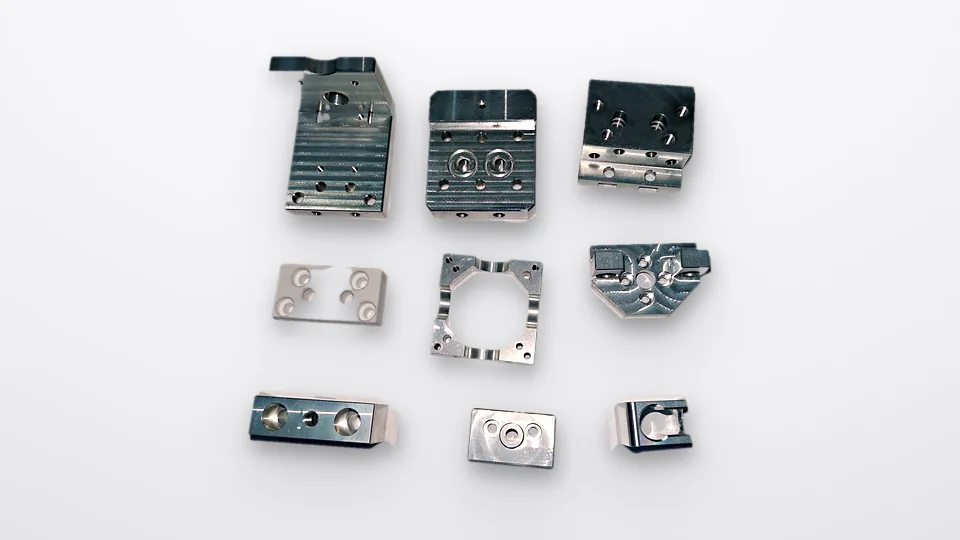
Six rules for cost-effective parts.
Most costs are fixed in the design. We check these rules in every quote as DFM notes.
What drives the price
- Blank size and removal volume
- Number of setups and machine time
- Tolerances, flatness and inspection scope
- Surface treatment and batch size
FAQ
Questions about cnc milling
When is milling cheaper than die casting?
At low quantities. A die-casting die typically pays off only from about 1,000 parts per year; below that the milled part is usually cheaper.
Can a milled sample later be produced as a casting?
Yes, but usually with adjustments: draft angles, uniform wall thicknesses and machining allowances must be added. We point this out in the quote.
Which finishes are common for aluminium?
Anodising (clear or coloured), hard anodising for wear protection, powder coating and chromating as a primer.
Other processes:
From the factory
What CNC milling looks like in production.
Original footage from the Schutawill company video – the machines and people who make your parts. No sound.
Your drawing.
Our quote.
Upload STEP or PDF – you receive feasibility, process, tooling cost, unit price and lead time.
Upload a drawing- Quote with DFM notes – non-binding
- NDA before the first exchange
- First articles with measurement report