Plastics
Plastic injection moulding
Mould making and series production from one source.
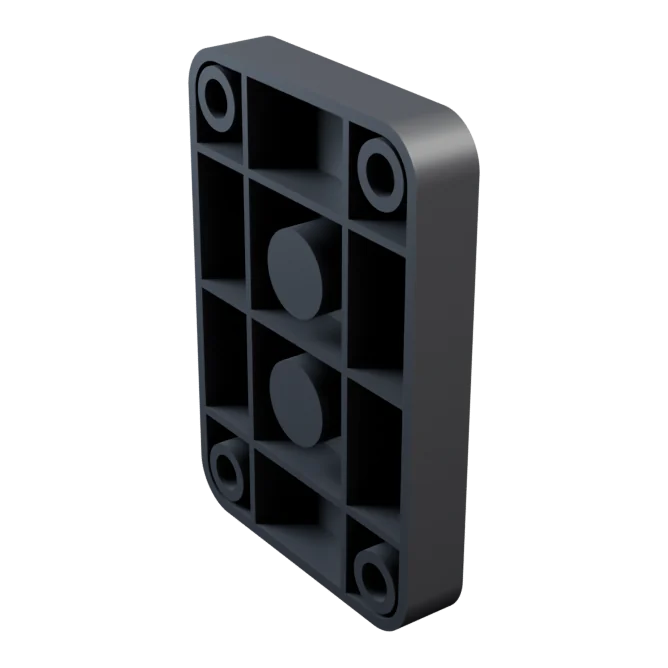
Process
How a part is made.
- DFM reviewWall thicknesses, draft angles, gate position and parting line are reviewed before mould making.
- Mould makingThe injection mould is made from tool steel – single or multi-cavity, with slides for undercuts.
- First articlesFirst parts from the series mould are measured; the mould is corrected if necessary.
- SeriesAfter your release, series production runs with fixed process parameters and sampling inspection.
Materials
Which materials are common?
| Material | Properties | Typical application |
|---|---|---|
| PP | low cost, chemically resistant, living hinges possible | Containers, lids, clips |
| ABS / PC/ABS | impact resistant, good surface, paintable | Housings, covers |
| PC | transparent, very impact resistant | Windows, light guides |
| PA6 / PA66 (also GF30) | strong, heat resistant, stiff with glass fibre | Technical parts, brackets, covers |
| POM | dimensionally stable, good sliding properties | Gears, sliding parts, snap fits |
| TPE / TPU | elastic, grippy, also as 2K component | Seals, grip zones, pads |
Guide values
Tolerances and finishes
| Feature | Guide value |
|---|---|
| Tolerance | ± 0.05 – 0.2 mm, depending on size, material and shrinkage |
| Wall thickness | 1 – 4 mm, as uniform as possible |
| Draft angle | 0.5 – 2°, more with texture |
| Surfaces | polished, EDM, textured (e.g. VDI 3400), printed, painted |
| Tool steel | e.g. 1.2311, 1.2738, 1.2344 – depending on volume and plastic |
| Options | multi-cavity moulds, slides, hot runner, inserts, 2K |
* Typical guide values. What applies to your part we confirm in the quote based on the drawing.
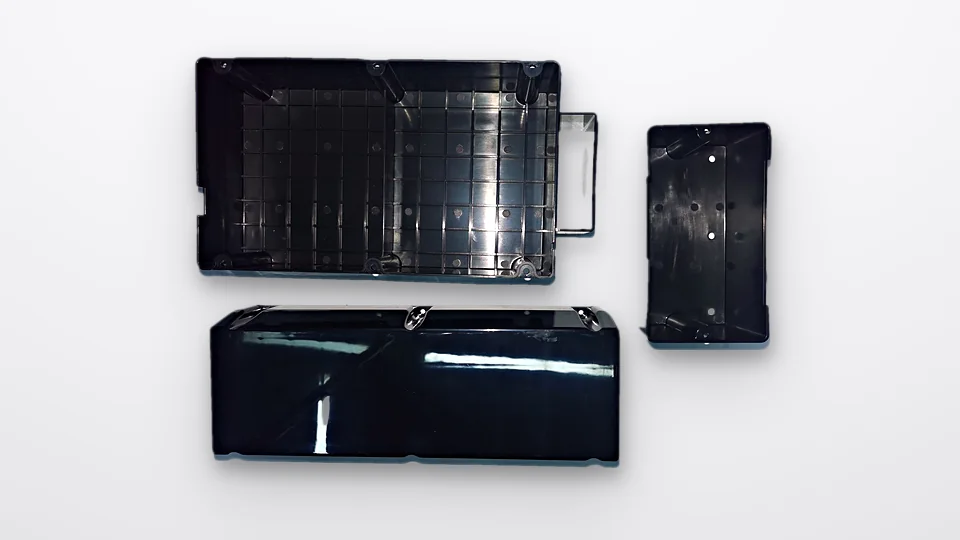
Design
Six rules for cost-effective parts.
Most costs are fixed in the design. We check these rules in every quote as DFM notes.
What drives the price
- Mould: size, cavities, slides, hot runner, steel grade
- Cycle time (wall thickness, cooling) and machine size
- Material price and part weight
- Rework, printing, assembly, packaging
FAQ
Questions about plastic injection moulding
Who owns the injection mould?
This is set out in the contract. Usually the mould belongs to the customer after payment; marking, service life and release are agreed in writing.
How long does mould making take?
That depends on size and complexity. We state mould making, sampling and series start separately in the quote.
Can I get prototypes first?
Yes. For functional tests we produce milled samples from the series material before the mould is built.
Other processes:
From the factory
What Plastic injection moulding looks like in production.
Original footage from the Schutawill company video – the machines and people who make your parts. No sound.
Your drawing.
Our quote.
Upload STEP or PDF – you receive feasibility, process, tooling cost, unit price and lead time.
Upload a drawing- Quote with DFM notes – non-binding
- NDA before the first exchange
- First articles with measurement report